I enjoyed the Skype session we had in class this past Thursday. Maggie is an engaging speaker, and I think she connected well with the class.
I think the information Maggie gave in her short talk is very helpful for people who are just starting to play around with using social media or Instagram specifically. I was already aware of most of her tips from the research I've done on Pinterest and other how-to blogs I've read. However, here are three takeaways from her talk that I think might be helpful to others.
1. Post often.
- This is so important, especially on platforms like Twitter
and Instagram. In order to keep an audience engaged with the
platform there needs to be consistent creation and sharing of
new material. This helps the interaction stay active and
growing.
2. Utilize hashtags.
- Hashtags are one of the main ways to attract new people
and expand an audience. Apparently, Instagram allows up to
30 hashtags per post, though I like to use around 20. It's
important to research certain hashtags before using them, just
to make sure that the content being tagged with that hashtag
is appropriate.
3. Use notepad function for spacing issues.
- This is the one tip I want to test out in the future. I've
noticed that when I write my captions into the Instagram app,
the block of text doesn't look quite the way I want. There's
always weird spacing issues, and I haven't been able to figure
out how to fix it. Maggie suggested typing out Instagram
captions into a phone notepad app, then copying and pasting
that caption into the Instagram app. If it works, it will be
super helpful for my future posts.
I think these three points were especially helpful, and I hope others found Maggie's talk interesting as well.
Sunday, April 30, 2017
Thursday, April 13, 2017
Reading Without Walls
During our class on Tuesday, I was trying to think of ways that I've seen or contributed to activism on social media platforms. I realized that I have participated in one particular "movement" of sorts. I first learned about the Reading Without Walls challenge on Twitter earlier this year. It is a campaign that many public libraries, schools, and bookstores are participating in right now. It was created by Gene Yang, who has written installments of Avatar: The Last Airbender for the publisher, Dark Horse.
Reading Without Walls encourages readers to:
This challenge falls right in line with a personal goal I made for myself for 2017 of reading more books with more diverse characters and plots. While the name of the campaign has a thinly veiled political reference, the "rules" of the campaign are very open, non-threatening, and inclusive. The main point is to read and learn about someone or a topic that is out of one's comfort zone.
With all of the uncertainty and fear that has taken hold due to the recent events taking place in the world, this campaign is a wonderful way of learning about other people and situations by tapping into the power of literature and stories. This campaign strives to help readers learn about others and see differences as wholesome and beautiful, rather than scary or threatening.
Reading Without Walls has been very popular from what I've seen on my Twitter feed. Some libraries are sharing pictures of children and the books they've read. Various publishers and book promotion companies have also supported this goal of diverse reading by sharing book recommendations either written about different cultures and ways of living, or written by diverse authors.
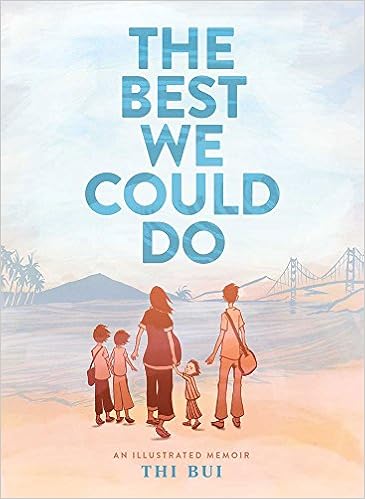
I have found it easy to support Reading Without Walls, and I have interacted with others in regards to it on social media. If you're interested in participating in the Reading Without Walls challenge, here are three great books to get you started:
This challenge falls right in line with a personal goal I made for myself for 2017 of reading more books with more diverse characters and plots. While the name of the campaign has a thinly veiled political reference, the "rules" of the campaign are very open, non-threatening, and inclusive. The main point is to read and learn about someone or a topic that is out of one's comfort zone.
With all of the uncertainty and fear that has taken hold due to the recent events taking place in the world, this campaign is a wonderful way of learning about other people and situations by tapping into the power of literature and stories. This campaign strives to help readers learn about others and see differences as wholesome and beautiful, rather than scary or threatening.
Reading Without Walls has been very popular from what I've seen on my Twitter feed. Some libraries are sharing pictures of children and the books they've read. Various publishers and book promotion companies have also supported this goal of diverse reading by sharing book recommendations either written about different cultures and ways of living, or written by diverse authors.
I have found it easy to support Reading Without Walls, and I have interacted with others in regards to it on social media. If you're interested in participating in the Reading Without Walls challenge, here are three great books to get you started:
You can learn more about Reading Without Walls here.
Friday, April 7, 2017
Privacy and Security Online
Personally, I feel like I have a strange outlook on internet security and privacy. This is probably related to the fact that I've grown up learning about the internet, so the warnings about internet safety, etc. all seem like second nature now. I'm also a little in weird in that while my Facebook profile is public, I am very reserved and rarely post on FB because I know all of the people I'm connected with on there. This is very opposite of my #bookstagram account where I have many, many followers who I have never met in real life, but I find that I'm more open and honest about my life and school with them.
I admit, I used to be one of those people who had a piece of tape or a sticker covering up the webcam on my computer. I don't do that anymore, but I think it's interesting how priorities about privacy differ from person to person. I don't really mind if people can see how many books I've bought over the past month, or what I've put in my Amazon shopping cart. I may find the ads that use my computer's cookies data annoying, but I don't find it creepy. I am more freaked out by the possibility of someone literally "watching" me on a webcam, than someone who can track my shopping/web browser history.
So while I'm personally not super concerned by the certain tactics of marketing companies or how data is collected by certain internet sites, I do realize why some people might be concerned. Especially when looking at the situation with Snowden, who we talked about briefly in class. People have right to at least know if their online activities are being watched/tracked. It's the principle of the the situation. People should not feel like they are being spied on without their knowledge or consent.
This being said, there are some basic guidelines I do follow in order to keep some of my privacy in tact. These tips might be helpful or at least reminders for younger students or internet users.
1. Don't share your home address or location. Some of the book bloggers or #bookstagram accounts I follow have actually set up a PO Box for the purpose of fans or publishers who want to send books or other promotional material. This prevents their actual home address from being broadcast to the public. It might also be a good idea to turn off the location option on your phone's privacy settings, so it is not linked to the photos/content you share.
2. Be wary about online banking and sites that will save your bank account information. I don't do too much with online banking. I really only go online to check the balance of my account. Though if you are doing a good bit of shopping through Amazon or PayPal, it's a good idea to make sure the passwords for those accounts are complex and secure.
3. Be aware of who you're interacting with, the sites you visit, and the information you share. We discussed a little bit about being cautious about the people we might meet online, such as the example of online dating. And of course, a good rule of thumb is if you don't want something broadcast to the public, then don't post it on the internet.
I admit, I used to be one of those people who had a piece of tape or a sticker covering up the webcam on my computer. I don't do that anymore, but I think it's interesting how priorities about privacy differ from person to person. I don't really mind if people can see how many books I've bought over the past month, or what I've put in my Amazon shopping cart. I may find the ads that use my computer's cookies data annoying, but I don't find it creepy. I am more freaked out by the possibility of someone literally "watching" me on a webcam, than someone who can track my shopping/web browser history.
So while I'm personally not super concerned by the certain tactics of marketing companies or how data is collected by certain internet sites, I do realize why some people might be concerned. Especially when looking at the situation with Snowden, who we talked about briefly in class. People have right to at least know if their online activities are being watched/tracked. It's the principle of the the situation. People should not feel like they are being spied on without their knowledge or consent.
This being said, there are some basic guidelines I do follow in order to keep some of my privacy in tact. These tips might be helpful or at least reminders for younger students or internet users.
1. Don't share your home address or location. Some of the book bloggers or #bookstagram accounts I follow have actually set up a PO Box for the purpose of fans or publishers who want to send books or other promotional material. This prevents their actual home address from being broadcast to the public. It might also be a good idea to turn off the location option on your phone's privacy settings, so it is not linked to the photos/content you share.
3. Be aware of who you're interacting with, the sites you visit, and the information you share. We discussed a little bit about being cautious about the people we might meet online, such as the example of online dating. And of course, a good rule of thumb is if you don't want something broadcast to the public, then don't post it on the internet.
So those are some of the steps I take to protect my online security and privacy. Though some people might take more advanced precautions than me, these tips are a good start.
Subscribe to:
Posts (Atom)