Friday, May 5, 2017

What I Learned in COMM 373

1. I think one of the main takeaways from the class is that people are weird/unsafe, and they don't always have your best interest in mind. There are jerks who just play around on social media, and there are also dangerous people to use social media to target others. Those kinds of people can really mess up the more good intentions of others. They cause unnecessary drama and ruin the main purpose of social media platforms. These not-so-wonderful people ruin the idea of social media for the rest of us.


2. A significant amount of personal information can makes its way online. If privacy is important to someone then he or she should monitor social media platforms carefully. Though it would be annoying if everyone did this, because then how would I be able to cyber-stalk them effectively?


3. Related to the previous point, it's important to think before posting any kind of content online. Once something has been shared on the internet it can be very difficult to remove it completely without requiring drastic action.


4. I really enjoyed the two Skype sessions we had in class. They were very interesting and kept my interest. It was great that the first Skype session went into how social media affects current/local events. It gave practical application of what we were learning in class, and I would have liked to see more of that practical element in the class material. 


5. I also really enjoyed writing weekly blog posts. It was really cool to pick a theme and apply the prompts to that theme. Though there was one prompt that had nothing to do with my theme (a sports team's social media), I think this semester assignment was a lot of fun. 


6. Connected to writing the blog posts, I really appreciated the ability to "choose my own adventure" for two of the posts. This really allowed me to go further with the chosen theme of my blog, and it let me apply what I was learning to a subject in which I'm interested.


7. In regards to the group project, I really enjoyed working with Canva and designing graphics for the client. It was fun choosing different themes and designing the layout. I think a basic knowledge of design is vital to working with social media since a good bit of content is visual based.


8. I appreciated how many types of social media platforms were discussed. I think we have a tendency to think of social media as Facebook, Twitter, and Instagram, but there are so many other platforms as well (SnapChat, Tumblr, YouTube, etc). Including other platforms in conversations about social media is important.


9. I enjoyed the assignment of researching the history of a social media site/app. It's really interesting to learn about the various motivations behind creating those kinds of platforms. I chose to research the creation of the Goodreads website, and I found the story behind it intriguing. 


10. I think it was super cool that we talked about sports media in class. I think its a very important field, and it embodies a good bit of the material we were learning like connecting with certain audiences, etc.


As for criticism or things that I wish had gone differently, I think I only have one main complaint. I wish that we had gone over more so the practical ways of using various social media. When I first enrolled in the class as an elective, I was really hoping we would cover ways of creating content, interacting with an audience, increasing engagement, how to look at analytics, etc. I thought the class would take more of a "how to"spin on the topic in terms of applying that knowledge to future professions and careers. 

While cyberbullying, cat-fishing, and "fake" people on the internet are valid concerns and topics of conversation, I already had a good amount of knowledge about those concepts from middle school/high school. Like I've mentioned before, I was disappointed by all of the negativity we talked about in regards to social media. However, I realize that not everyone has had positive experiences like me, so maybe I'm just the odd one out. However, I think a little more balance between the theoretical and the practical ways of looking at social media would be beneficial.


Have a great summer everyone!!

Sunday, April 30, 2017

Instagram Skype Session

I enjoyed the Skype session we had in class this past Thursday. Maggie is an engaging speaker, and I think she connected well with the class.

I think the information Maggie gave in her short talk is very helpful for people who are just starting to play around with using social media or Instagram specifically. I was already aware of most of her tips from the research I've done on Pinterest and other how-to blogs I've read. However, here are three takeaways from her talk that I think might be helpful to others.


1. Post often.
          - This is so important, especially on platforms like Twitter
          and Instagram. In order to keep an audience engaged with the
          platform there needs to be consistent creation and sharing of 
          new material. This helps the interaction stay active and
          growing.

2. Utilize hashtags.
          - Hashtags are one of the main ways to attract new people
          and expand an audience. Apparently, Instagram allows up to
          30 hashtags per post, though I like to use around 20. It's
          important to research certain hashtags before using them, just
          to make sure that the content being tagged with that hashtag
          is appropriate.

3. Use notepad function for spacing issues.
          - This is the one tip I want to test out in the future. I've
          noticed that when I write my captions into the Instagram app,
          the block of text doesn't look quite the way I want. There's
          always weird spacing issues, and I haven't been able to figure
          out how to fix it. Maggie suggested typing out Instagram
          captions into a phone notepad app, then copying and pasting
          that caption into the Instagram app. If it works, it will be
          super helpful for my future posts.


I think these three points were especially helpful, and I hope others found Maggie's talk interesting as well.


Thursday, April 13, 2017

Reading Without Walls

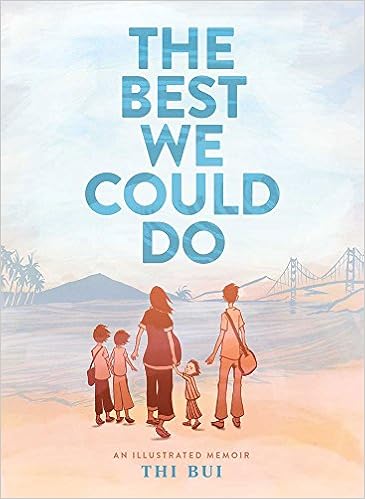
During our class on Tuesday, I was trying to think of ways that I've seen or contributed to activism on social media platforms. I realized that I have participated in one particular "movement" of sorts. I first learned about the Reading Without Walls challenge on Twitter earlier this year. It is a campaign that many public libraries, schools, and bookstores are participating in right now. It was created by Gene Yang, who has written installments of Avatar: The Last Airbender for the publisher, Dark Horse.

Reading Without Walls encourages readers to:


This challenge falls right in line with a personal goal I made for myself for 2017 of reading more books with more diverse characters and plots. While the name of the campaign has a thinly veiled political reference, the "rules" of the campaign are very open, non-threatening, and inclusive. The main point is to read and learn about someone or a topic that is out of one's comfort zone. 

With all of the uncertainty and fear that has taken hold due to the recent events taking place in the world, this campaign is a wonderful way of learning about other people and situations by tapping into the power of literature and stories. This campaign strives to help readers learn about others and see differences as wholesome and beautiful, rather than scary or threatening.

Reading Without Walls has been very popular from what I've seen on my Twitter feed. Some libraries are sharing pictures of children and the books they've read. Various publishers and book promotion companies have also supported this goal of diverse reading by sharing book recommendations either written about different cultures and ways of living, or written by diverse authors. 

I have found it easy to support Reading Without Walls, and I have interacted with others in regards to it on social media. If you're interested in participating in the Reading Without Walls challenge, here are three great books to get you started:


You can learn more about Reading Without Walls here.

Friday, April 7, 2017

Privacy and Security Online

Personally, I feel like I have a strange outlook on internet security and privacy. This is probably related to the fact that I've grown up learning about the internet, so the warnings about internet safety, etc. all seem like second nature now. I'm also a little in weird in that while my Facebook profile is public, I am very reserved and rarely post on FB because I know all of the people I'm connected with on there. This is very opposite of my #bookstagram account where I have many, many followers who I have never met in real life, but I find that I'm more open and honest about my life and school with them.

I admit, I used to be one of those people who had a piece of tape or a sticker covering up the webcam on my computer. I don't do that anymore, but I think it's interesting how priorities about privacy differ from person to person. I don't really mind if people can see how many books I've bought over the past month, or what I've put in my Amazon shopping cart. I may find the ads that use my computer's cookies data annoying, but I don't find it creepy. I am more freaked out by the possibility of someone literally "watching" me on a webcam, than someone who can track my shopping/web browser history.


So while I'm personally not super concerned by the certain tactics of marketing companies or how data is collected by certain internet sites, I do realize why some people might be concerned. Especially when looking at the situation with Snowden, who we talked about briefly in class. People have right to at least know if their online activities are being watched/tracked. It's the principle of the the situation. People should not feel like they are being spied on without their knowledge or consent.

This being said, there are some basic guidelines I do follow in order to keep some of my privacy in tact. These tips might be helpful or at least reminders for younger students or internet users.

1. Don't share your home address or location. Some of the book bloggers or #bookstagram accounts I follow have actually set up a PO Box for the purpose of fans or publishers who want to send books or other promotional material. This prevents their actual home address from being broadcast to the public. It might also be a good idea to turn off the location option on your phone's privacy settings, so it is not linked to the photos/content you share.


2. Be wary about online banking and sites that will save your bank account information. I don't do too much with online banking. I really only go online to check the balance of my account. Though if you are doing a good bit of shopping through Amazon or PayPal, it's a good idea to make sure the passwords for those accounts are complex and secure.

3. Be aware of who you're interacting with, the sites you visit, and the information you share. We discussed a little bit about being cautious about the people we might meet online, such as the example of online dating. And of course, a good rule of thumb is if you don't want something broadcast to the public, then don't post it on the internet.


So those are some of the steps I take to protect my online security and privacy. Though some people might take more advanced precautions than me, these tips are a good start.

Friday, March 31, 2017

Performative Aspects of #Bookstagram

We have discussed how social media has given people the ability to present an image of themselves and their lives that may not necessarily be true. Of course, some people take this more to an extreme, but it's possible that everyone includes an element of "performing" in the content that they post.

Performance in social media can be seen in extreme and perhaps acceptable situations depending on how the person is using certain platforms. Take #bookstagram for example. The whole idea of branding an Instagram account as a #bookstagram, is to promote reading and books. As long as the photos are clear and books are involved in the post in some way, then the post works towards that theme.
from @nikkiinwanderland

from @celinereads

However, performative aspects can be seen in content from people who have gained a massive following. The standards are super high for those people in order to maintain interest and interaction with their followers. This might mean having an impressive, often times, HUGE bookshelves, and of course, the books are color coordinated. Or maybe the flat lays or props start to become detailed and complex, always trying to find that next step above the current trends.

For people just starting out with a #bookstagram themed account or accounts with modest follower counts can begin to feel pressured by the content already being presented. There is a pressure to buy a lot of props or book-themed products, when the focus was originally only supposed about a literal book.

Personally, I have posted photos of books before that I hadn't yet had the chance to even read. Sometimes I feel like I'm being dishonest in a way because it feels like I'm presenting an image (or performing) as a avid book reader, which I am, though I definitely have other focuses (like school). Though it is tempting to perform and construct complex layouts and have great props and products, sometimes it is necessary to also just show real life and to be honest.

I think performance in social media is very obvious with themes like #bookstagram or themes that are food related. There is a standard for visual aesthetic and people develop a desire to create and promote a certain image. I definitely enjoy some of the performative aspects. I like making my photos look pretty, and sometimes I'll put a lot of time into a layout. However, I also integrate simple, down-to-earth photos that make the book the focus rather than me, my lifestyle, or objects I own.

from me! @britneylynnewrites
In some cases I think that performance in social media is okay. Problems begin to arise though, when it begins to make other people feel like they don't measure up, or their content is not as important. Everyone's individual experiences are important and valid, and the performative aspects should not make someone else feel like their experience doesn't matter or is less-than another's. It's fun to brag once in a while, but it shouldn't be a continual theme on social media platforms.

Thursday, March 23, 2017

Sports and Social Media

My alliances with sports teams often change depending on how certain seasons go. However, I often follow the Steelers football team because my mom is a huge fan. I think the Steelers do a great job with promoting the players and the team as a whole on their social media platforms. 


Like we have discussed in class, sports teams are using social media to promote building team spirit by humanizing the athletes. It is very common to see individual posts from individual athlete accounts reposted on the official team platforms. Posts from current players like Antonio Brown and retired athletes like Hines Ward are often shared. 

A great example of how the players are humanized is seen in the screen shot above. The middle photo on the top row shows one of the players cuddling a puppy. As of the time I'm writing this post, that video clip has almost 20,000 likes and nearly 64,000 views. People absolutely swoon when they see a powerful, athletic football player with a puppy. They also use the puppy angle on their Twitter page like the photo below:

"Am I getting paid for this?" - Molly, the dog

The Steelers also use their social media platforms to encourage fans to feel like they are really a part of the team. In the screenshot below of the Steelers Instagram, there are two pictures that show fans cheering the team on. 


I think the team does a great job of utilizing the reach of social media for the exact reasons we discussed in class. They show athletes being normal humans and the platforms really helps fans to tap into the team spirit. 

Sunday, March 19, 2017

Supportive Online Communities

As an introvert, I find it much easier to communicate through writing. When I was younger I would write letters to pen-pals, and then once I had access to the internet, I wrote emails instead. I can remember when I first got my own email address, and I would exchange those questionnaires/quizzes that were popular with all my friends. I shared way more in those emails than I ever did in any face-to-face conversations. I have had similar experiences with newer platforms like Facebook, Instagram, and Twitter.

My first experience with an online community was in my freshman year of high school. I became a member of an online forum for the creative writing class I was taking. The members of the forum were from all over the United States, and England as well. What made the forum so successful was that the members all had a current interest: writing a novel. While the main point of the forum was to discuss weekly lessons, there were also sections for talking about movies, books, and other fun topics. This was a very safe atmosphere because most of the members were the same age (no one older than 19), and there was a moderator who made sure content remained appropriate. The forum allowed me to find people with similar interests and interact with methods that were within my comfort zone.


In our class readings the concepts of online disinhibition have had negative connotations (which in some cases are understandable), though I think there are some positives that go along with those concepts. I have found aspects of impression management and anonymity useful in my own use of social media, not for promoting a fake persona, but in feeling more comfortable with being myself. In "real" life instances I would often struggle with feeling like what I had to say was not important or that people were not listening to me. Online interactions however, made it easier for me to articulate my thoughts better, and the responses I would get from others were of a much higher quality. Online communication and social media platforms have been extremely helpful for broadening my own confidence, and has actually improved the quality of my face-to-face/"real" life interactions with others.

Currently, I am a member of a "support" group called "Go Teen Writers Community," on Facebook. I'm not a teen anymore, so I may have to find another alternative soon. However, it is very similar to the forum I was a part of in high school. Members can post questions about characters or plot ideas that they are working on. On the weekends members are allowed to promote their websites or blogs, or post links to works that they've published.


I think one of the main reasons I've had such good experiences with online communication and social media is because I have tapped into a niche. The forums I've been a part of have all been focused towards creative writing and publishing, and the accounts that I use more regularly on Twitter and Instagram are my bookstagram focused accounts. This has allowed me to somewhat filter the connections I make and the conversations I have. For others who may be using social media platforms for other purposes may deal with more of the negative aspects, though that has not been my personal experience.